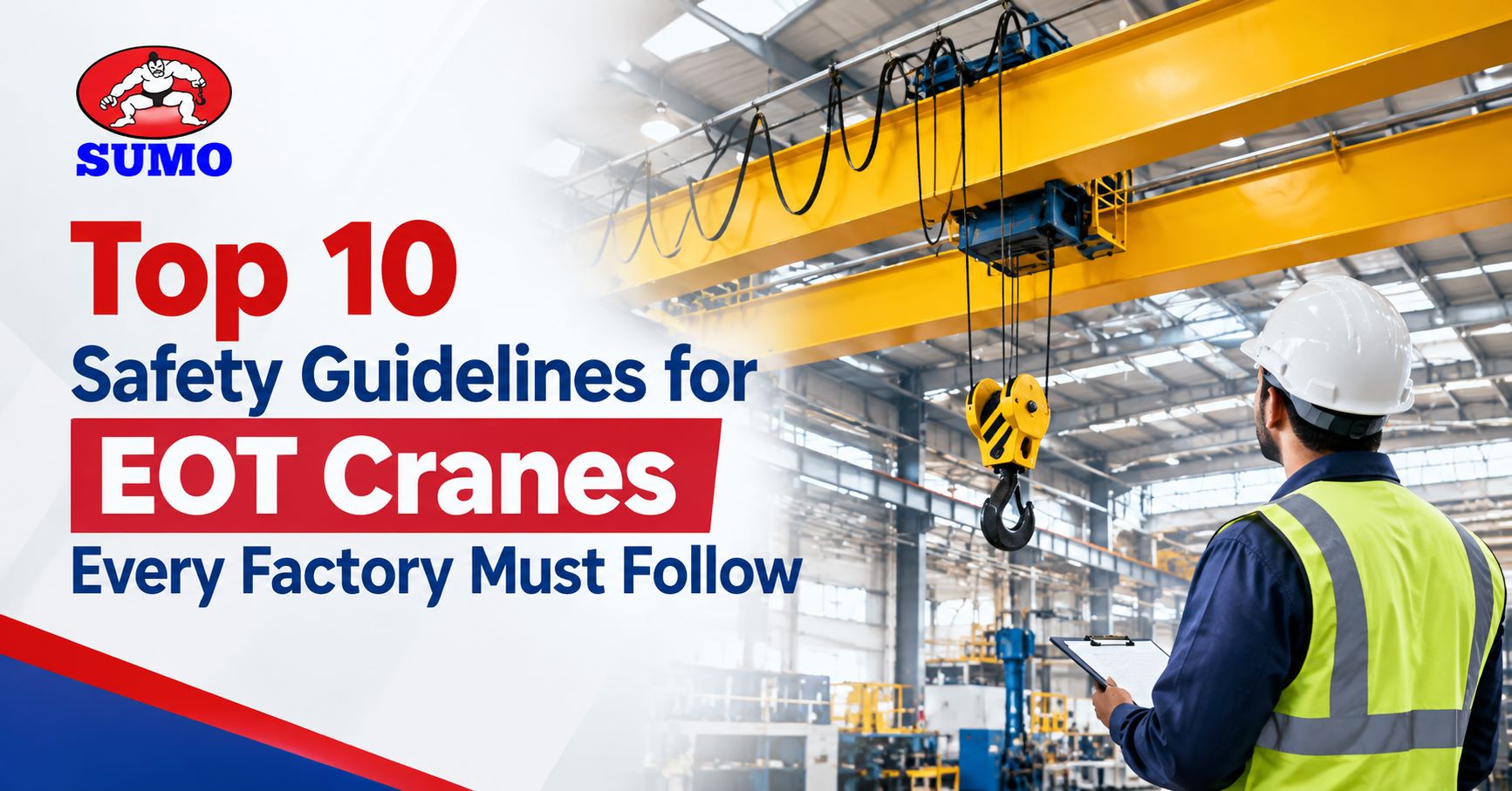
Electric Overhead Traveling (EOT) cranes are the backbone of modern industries, warehouses, workshops, and manufacturing plants. Their unmatched capability to lift and move heavy loads streamlines production, but operating them without rigorous safety standards introduces catastrophic risks to your workforce and facility.
Adhering to proper EOT crane safety guidelines doesn't just minimize the risk of costly accidents—it ensures employee health, maximizes machinery uptime, and guarantees compliance.
Here are the top 10 essential safety measures every factory must fulfill.
1. Conduct Regular Pre-Operational Inspections
Daily pre-shift inspections are non-negotiable. Before powering up the crane, operators must thoroughly inspect critical components, including ropes, hooks, brakes, hoists, wheels, tracks, electrical wiring, limit switches, and controls. Catching wear and tear early prevents sudden mechanical failures mid-operation.
2. Strictly Respect the Safe Working Load (SWL)
Every EOT crane is engineered with a strict maximum load capacity that must never be exceeded. Overloading places immense, undue stress on the bridge structure, hoist, wire ropes, and hooks, drastically increasing the risk of structural failure or tip-overs.
3. Ensure Operator Training and Authorization
Only certified, trained, and authorized personnel should ever operate an EOT crane. Operators must possess deep familiarity with control layouts, load charts, emergency stop protocols, warning alarms, and workplace safety requirements. Periodic refresher courses keep these safety habits sharp.
4. Rigorous Checks for Rigging and Lifting Accessories
Hooks, wire ropes, chains, slings, and shackles endure severe physical stress during daily lifting. Inspect these accessories periodically for telltale signs of fatigue, such as cracks, deformations, corrosion, broken wires, or throat-opening stretch.
5. Prohibit Personnel Under Suspended Loads
Never allow workers to walk, stand, or work beneath a suspended load. Falling or shifting loads can lead to fatal workplace accidents. Utilize high-visibility warning signs, physical barriers, designated lifting zones, and strict ground-to-operator communication to enforce this rule.
6. Avoid Jerking and Sudden Movements
Smooth operation is safe operation. Crane operators must avoid sudden jerking, rapid acceleration, and abrupt stops. Smooth handling keeps swinging loads under control and preserves the structural integrity of the crane and rigging.
7. Inspect Limit Switches and Safety Devices
Safety mechanisms like limit switches, anti-collision sensors, emergency stop buttons, and overload cut-offs are your last line of defense against accidents. Test these devices regularly, and never bypass, disable, or tamper with them under any circumstances.
8. Maintain Clear, Reliable Communication
When an operator's vision is obstructed or restricted, clear communication becomes a vital safety bridge. Standardized hand signals, two-way radios, or dedicated banksmen/signalers ensure coordinated movements. Designate a single signal person to avoid confusion on the shop floor.
9. Identify and Control EOT Crane Hazards
Factories must perform proactive risk assessments to map out and mitigate potential lifting hazards. Key risks to watch out for include:
- Overloading and improper load attachment
- Load swinging, dropping, or tipping
- Wire rope fraying and hook deformation
- Electrical hazards and bare lines
- Crane-to-crane collisions in shared bays
- Low visibility and poor workplace lighting
- Unauthorized use by untrained staff
- Employees drifting into active lift zones
10. Implement a Preventive Maintenance Program
Routine preventive maintenance keeps your EOT cranes running smoothly and extends their operational lifespan. A structured maintenance schedule should cover the hoist mechanism, gearboxes, motors, wire ropes, wheels, control panels, and primary load-bearing structures.
Why Comprehensive Safety Matters:
EOT crane safety goes far beyond basic operation. It encompasses a holistic culture covering daily inspections, preventive maintenance, load calculation, rigorous operator training, and intelligent plant layout planning. Compliance safeguards your workforce, minimizes downtime, and supercharges equipment efficiency.
Equip Your Facility with Safe, Reliable EOT Cranes:
Boosting material handling efficiency starts with choosing reliable lifting equipment. Sumo Material provides world-class material handling solutions tailored to the rigorous demands of modern manufacturing plants.
Whether you are looking to install a new crane system or upgrade legacy material handling equipment, partner with Sumo Material to ensure peak performance backed by uncompromising safety standards.
Conclusion
EOT cranes are indispensable assets for heavy-duty industries, but they demand absolute respect and stringent safety protocols. By combining daily inspections, trained operators, correct load handling, proactive maintenance, and clear communication, your factory can cultivate a secure, high-performing working environment.
Remember: Safety isn't just a regulatory checkbox—it is the foundation of every successful lifting operation.