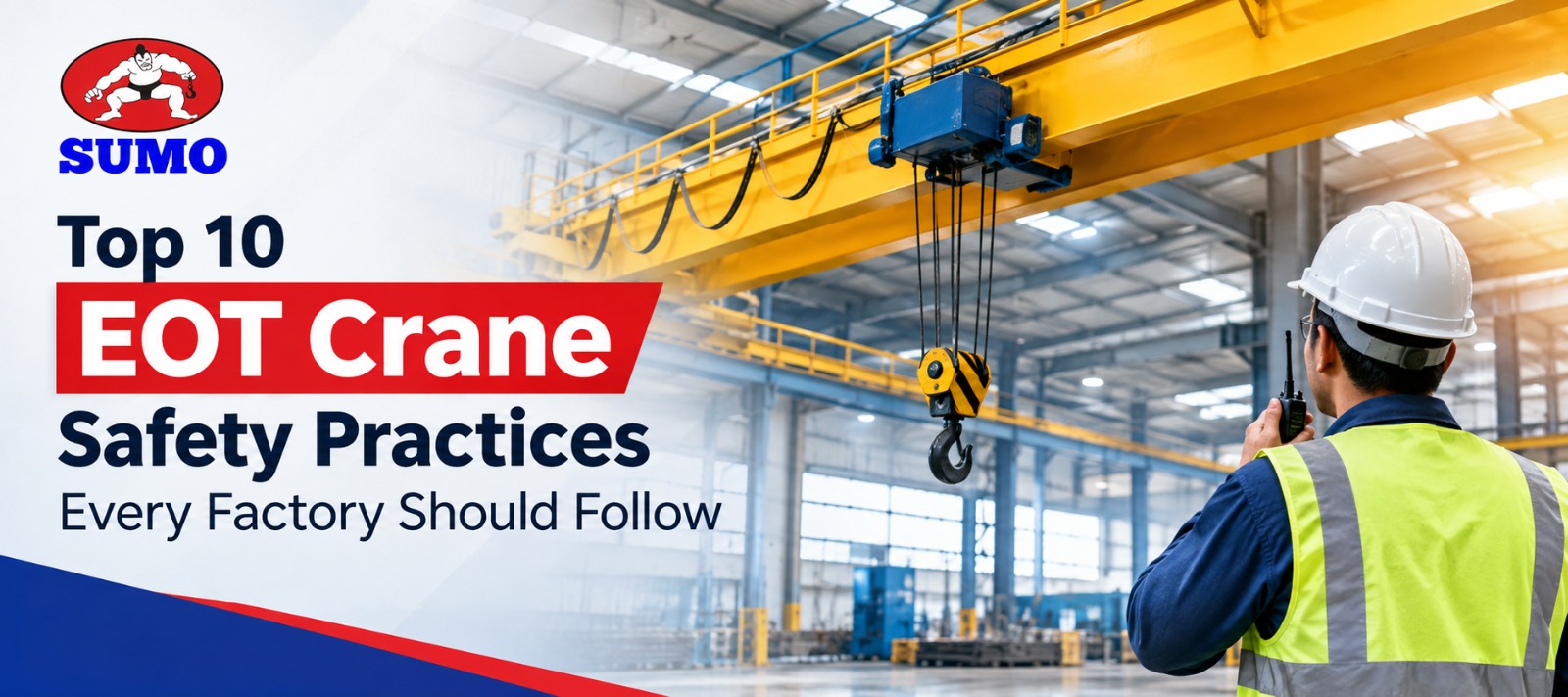
Electric Overhead Traveling (EOT) cranes are the backbone of material handling in industrial environments, factories, and manufacturing plants. By streamlining the movement of heavy loads, they significantly boost overall operational productivity. However, because EOT cranes handle massive weights, workplace safety is non-negotiable. Rigorous safety protocols in operation, maintenance, and operator training are essential to preventing accidents and costly downtime.
Partnering with a dependable EOT Crane Manufacturer in India is the critical first step, ensuring your facility gets a crane tailored precisely to its load requirements, working environment, and spatial constraints. Beyond choosing the right equipment, factories must enforce strict safety practices throughout the entire lifecycle of their cranes.
Here are the top 10 practices to follow:
1. Choose the Right EOT Crane and Load Capacity for Safety
Crane safety starts at the drawing board. A factory must select an appropriate model based on parameters like lifting capacity, span, height, and duty cycle.
· Never Overload: Operating a crane beyond its maximum rated load places excessive stress on the hoist, wire rope, and bridge components.
· Verify Weights: Operators should verify and weigh every load prior to lifting, ensuring proper positioning and balance to prevent shifting during transit.
2. Make Routine Inspections Non-Negotiable
It is possible for a crane to operate normally without showing immediate signs of wear or mechanical problems. Regular inspections are vital to detect issues early.
· Check Key Components: Strictly follow an inspection schedule for hooks, wire ropes, brakes, wheels, hoists, limit switches, controls, and electrical connections.
· Report Anomalies Instantly: Strange noises, vibrations, damaged parts, or malfunctions should be reported immediately. Operating with defects increases safety risks and repair costs.
3. Ensure Only Professional Operators Run the Equipment
Modern technology does not automatically guarantee safety. Operators need formal training before taking control of heavy machinery.
· Core Training Areas: Training must cover crane controls, loading/unloading procedures, movement paths, warning signals, and emergency protocols.
· Pre-Lift Surveys: Operators must always survey the working environment before moving a load. Only authorized personnel should be permitted in the cabin or controls.
4. Inspect and Lift with Appropriate Accessories
The crane is only one part of the lifting process; slings, hooks, shackles, and chains play an equally critical role.
· Compatibility Check: Accessories must be fully compatible with the load weight and dimensions.
· Damage Prevention: Routinely check rigging accessories for wear, deformation, cracking, or rusting. Ensure the load is properly secured and balanced to avoid dangerous shifts.
5. Maintain a Safe Distance from Suspended Loads
Clear spatial zones are mandatory during overhead lifting operations.
- Keep Zones Clear: No person should ever stand or walk beneath a suspended load.
- Establish Boundaries: Use warning signs, physical barriers, and designated lifting areas to keep unauthorized personnel away. Operators must also maintain a safe distance while moving loads through the facility.
6. Periodically Test All Crane Safety Devices
Safety mechanisms are your last line of defense against catastrophic failures.
- Core Devices to Check: Brakes, emergency stops, alarms, and limit switches must be tested periodically to ensure they function properly.
- Zero Tolerance for Failures: Never operate a crane when vital safety devices fail. Prompt repairs prevent small issues from turning into tragedies.
7. Practice Smooth and Careful Movement
Sudden movements create severe mechanical stress and hazardous load swinging.
- Avoid Jerks: Sudden acceleration, rapid deceleration, or abrupt directional changes are extremely dangerous.
- Vertical Lifts Only: Materials must be lifted vertically to avoid dangerous side-pulling forces. Smooth acceleration gives operators better control and protects the crane elements.
8. Implement a Strict Preventive Maintenance Program
Maintenance is one of the most efficient methods to keep a crane safe, compliant, and operable.
- Comprehensive Care: Routine maintenance must include proper lubrication, mechanical checks, electrical testing, brake adjustments, and wire rope inspections.
- Log Everything: Keep adequate service records to monitor inspections, repairs, and part replacements. Consulting local EOT Crane Suppliers in Ahmedabad can also help you determine the exact maintenance schedule your machinery requires.
9. Maintain Clear Communication Protocols
Effective communication between the crane operator and workers on the factory floor is vital, especially when visibility is limited.
- Standardized Signals: Factories must establish clear hand signals or approved communication methods for lifting tasks.
- Stop on Confusion: Operators must receive clear instructions before moving a load. If communication breaks down or becomes unclear, all operations must stop immediately until fully understood.
10. Partner with a Reliable Manufacturer
To have safe operations, the first step is to choose a crane that suits your specific application. Working with a trusted EOT Crane Manufacturer in India will assist businesses in choosing the right crane depending on load capacity, environmental conditions, frequency of lifts, and available space.
For heavy-duty industrial applications, partnering with a dependable Double Girder EOT Crane Supplier in India is essential where high lifting capacities are required. For lighter or alternative applications, a well-engineered single-girder system may be the ideal way forward.
Ultimately, the objective is not just buying a piece of machinery, but investing in a complete material handling solution that ensures long-term safety and efficiency.
Conclusion
Safety aspects of EOT cranes should always remain a top priority for any industrial facility. Whether it is selecting the right type of crane, complying with load capacities, conducting routine inspections, or maintaining clear communication, every step leads to safer and more efficient operations.
The choice of a reliable EOT Crane Manufacturer in India will definitely help you get a suitable crane for your industry. At Sumo Material, we provide reliable, end-to-end solutions for material handling. With proper equipment, meticulous maintenance, and strict operating procedures, factories can successfully avoid risks, reduce downtime, and increase productivity.